
Nutrition determinants methodologies: sampling approaches
Patrizia Pajak, Data Analyst and Research Advisor at Action Against Hunger, explores how nutrition determinants methodologies differ in their sampling approaches and what this means for interpreting findings.
In a previous article, we explored how key nutrition determinants methodologies such as Link NCA, Rapid Nutrition Determinants Analysis (NDA), Nutrition Vulnerability Analysis (NVA), and IPC Acute Malnutrition (IPC AM) differ in terms of objectives, scope, and the nutrition outcomes they are designed to analyse. Another critical dimension to look at is sampling methods and data sources. Understanding the sampling strategy under each method is essential for interpreting the findings and for applying them correctly to programmatic responses. Sampling allows to describe local realities in depth, determine the scale at which findings can be generalised, and supports the comparison or combination of evidence across different locations. Sample size also influences resource requirements, timelines, and the types of questions each approach can answer.
This article examines how sampling approaches differ across these methodologies, focusing on three key aspects:
- the sampling design
- the level of representativeness
- the implication for data interpretation
Link NCA
The Link NCA uses a participatory, mixed-method methodology combining primary and secondary data sources to build a comprehensive picture of undernutrition determinants within a specific context. The qualitative component sample is selected purposively and shaped according to the heterogeneity of the context, including a variety of participants from caregivers of children under-five to community leaders, and service providers. The qualitative sampling framework is guided by the need to capture diversity of opinions across key areas, rather than statistical representativeness.
Data collection lasts around 6 days in each of the selected locations and continues until thematic saturation is reached, ensuring sufficient depth in exploring the hypothesised determinants. This process usually includes 48 FGDs, 54 KIIs, and observations across representative villages. This qualitative component can be complemented by either secondary or primary quantitative survey data, with a sample size designed to enable statistical inference and to identify significant associations between determinants and nutritional outcomes. All data sources are then triangulated to build a coherent and evidence-based case able to the studied context. Therefore, the Link NCA provides in-depth and rigorous analysis of nutrition determinants applicable to the district or intervention area under study and should not be generalised beyond this area.
Rapid NDA
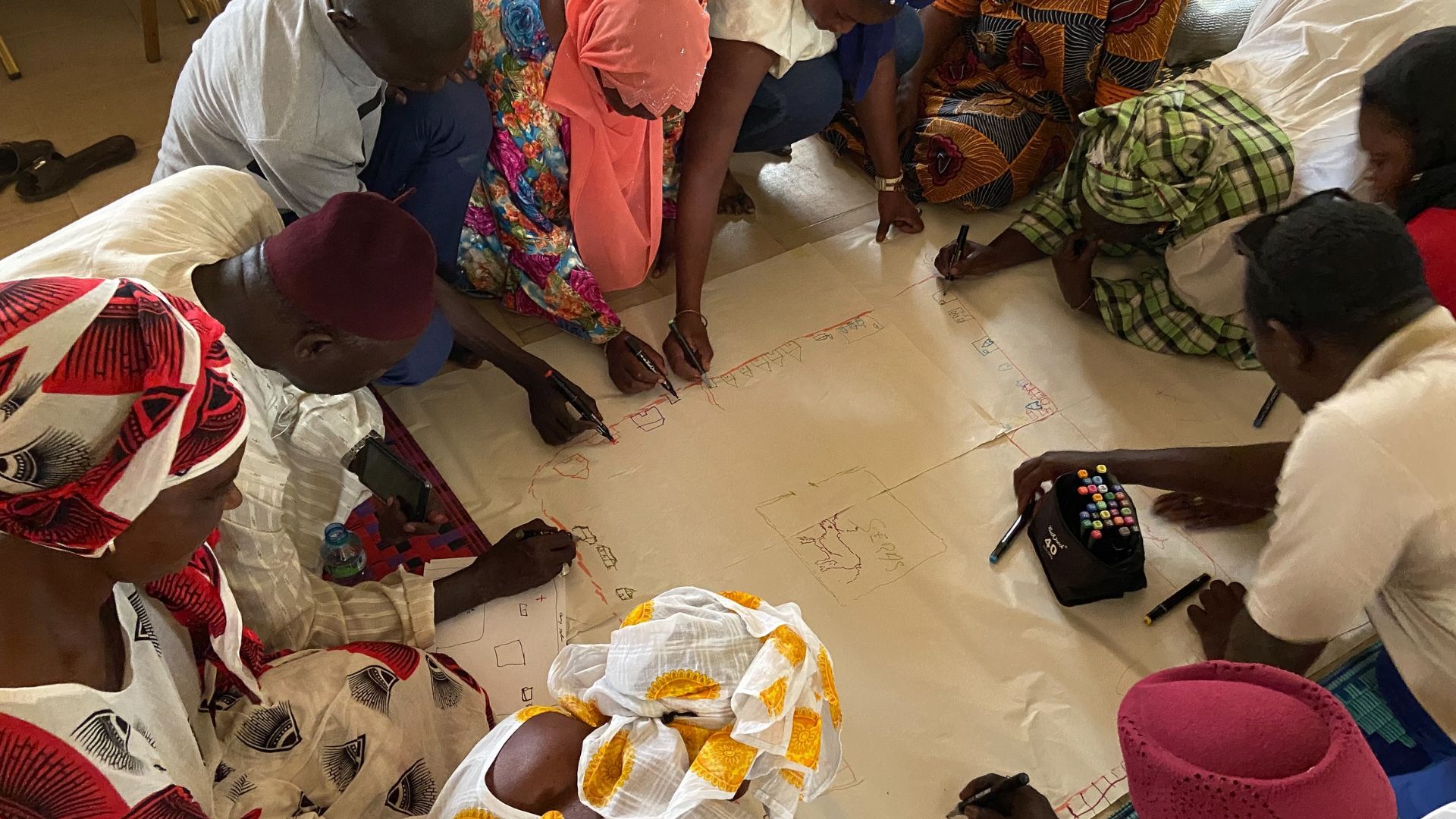
The Rapid NDA adopts solely a qualitative, purposive sampling approach designed to generate more rapid, contextualised insights in small-scale and resource-constrained settings. The sampling strategy focuses on selecting one village deemed broadly representative of the study context, based on key characteristics such as livelihoods, access to services, or socio-cultural factors. Within this location, participants are purposively selected to capture diverse perspectives across relevant population groups, including caregivers of children under-five, community leaders, and healthcare providers. The objective is not statistical representativeness, but rather to ensure sufficient variation and depth of perspectives to reach data saturation.
Data collection is conducted over approximately one week combining focus group discussions, semi-structured interviews, and observations, typically amounting to 9 FGDs and 11 KIIs. In contexts where heterogeneity is present, the sampling frame may be expanded to include additional villages, with the full data collection process replicated in each location. The strength of this approach lies in its ability to produce more rapid and cost-efficient nutrition determinants outputs tailored to specific contexts, making it particularly suited to sub-district settings. However, its findings remain analytically representative only of the selected context and are limited to in depth qualitative insights. Nevertheless, the offer valuable insights on nutrition determinants and their interactions to inform multi-sectoral nutrition security strategies and initiatives.
NVA
The NVA adopts a flexible, multisectoral approach designed specifically for fragile and low-access contexts where traditional surveys are not feasible. Rather than relying on a predefined sampling frame, the NVA consolidates multiple data sources, including routine monitoring data, remote household surveys, secondary datasets, and purposively selected key informant interviews, complemented where possible by qualitative insights.
Sampling and data sources are therefore pragmatic and driven by availability and access, rather than statistical representativeness. The approach prioritises triangulation across diverse data sources and relies on structured, consensus-based analysis among stakeholders to validate findings and build a shared interpretation of key nutrition vulnerabilities and determinants in emergency contexts.
In highly constrained settings, qualitative data may serve as the primary evidence, while in other cases it may complement quantitative information collected through remote surveys. As a result, the NVA findings provide a “good enough”, actionable snapshot of nutrition vulnerability to inform decision-making and advocacy in real time. However, they are not statistically representative and should be interpreted as indicative of risk patterns for the analysed area, also given that rapidly evolving emergency contexts can shift vulnerability patterns.
IPC AM
The IPC AM is not based on a primary sampling strategy, but rather on the systematic consolidation and analysis of existing data sources to classify the severity of acute malnutrition within defined geographic areas (nationally and/or regionally). It primarily relies on secondary datasets, such as SMART surveys, complemented by routine monitoring systems, food security assessments, health information data, and relevant qualitative information where available. As such, the representativeness of IPC findings is inherited from the underlying data sources and their respective sampling designs, which are typically valid at national, sub-national or livelihood-zone level.
The approach follows a structured, consensus-based analysis process, where technical experts validate the available information. While the IPC provides geographically comparable classifications of severity, it does not aim to explore causal pathways in depth. Its strength lies in producing a harmonised picture of acute malnutrition severity to inform decision-making with top level information about nutrition determinants. Additionally, the robustness and precision of IPC classifications remain dependent on the quality, coverage, and timeliness of the available data, particularly in low-access or rapidly evolving emergency contexts where evidence gaps may be present.
Conclusions
Across these methodologies, differences in sampling approaches directly influence how nutrition determinants are identified. Link NCA and Rapid NDA rely on purposive sampling to unpack causal pathways more in depth, generating context-specific explanations of how determinants interact, but with findings that remain geographically bounded. Instead, NVA and IPC AM adopt a broad evidence-synthesis approach, drawing on multiple data sources to identify key nutrition drivers and patterns of vulnerability across larger or emergency settings, although with less detail on causal interactions and a more limited set of prioritised risk factors.
As a result, the analysis of nutrition determinants ranges from a more detailed, pathway-based understanding to a top-level identification of risk factors and vulnerabilities. Recognising these differences is essential to ensure that conclusions about nutrition determinants are interpreted appropriately and applied at the right level to inform nutrition security programmatic responses.
Explore our nutrition resources
Knowledge Against Hunger is the home of all our technical, research, learning and strategic documents. Take a look at our nutrition resources here.
Stay up to date with our emails
Get new resources, technical tools, research findings and expert insights delivered to your inbox every quarter.
Four emails a year. Unsubscribe at any time.