

Nutrition determinant methodologies: understanding the scope differences
Nutrition determinants refer to biological, socio-economic, environmental, and behavioural factors that affect food choices, nutrient intake, and health outcomes throughout childhood and into adulthood.
Understanding nutrition determinants among children under five is critical for identifying key influences on their nutritional status and that of their caregivers. This knowledge supports the development of targeted nutrition security responses to improve their wellbeing and prevent undernutrition, so that children under-five can grow and thrive.
Selecting an appropriate methodology to analyse nutrition determinants requires a clear understanding of their scope. In this opinion pieces, we compare four key methodologies most commonly used to assess nutrition determinants, the Link NCA, the Rapid Nutrition Determinants Assessment (Rapid NDA), the Nutrition Vulnerability Analysis (NVA), and IPC Acute Malnutrition Classification (IPC AM). This analysis focuses on three core dimensions:
- the key objectives each methodology is designed to address
- the geographical scale at which each method is appropriate
- the forms of undernutrition each approach is equipped to assess
Link NCA
Link NCA is a mixed‑methods approach based on the UNICEF conceptual framework and designed to identify the plausible causal pathways of undernutrition in a given area. Considered the most robust methodology, its full version combines statistically representative quantitative surveys with in‑depth qualitative enquiry to generate a multi‑sectoral, evidence‑based consensus on the determinants of undernutrition. The approach also incorporates seasonal patterns, historical trends, and the identification of nutritionally vulnerable groups, strengthening its ability to inform comprehensive programme design.
The methodology is designed to be implemented at regional or district level, where population size and diversity allow for representative sampling and detailed qualitative analysis across sectors such as health and nutrition, care practices, mental health, food security, WASH and gender, while also capturing variations within and across communities. Although district level studies are more common, such as those conducted in Sierra Leone, Cameroon and South Sudan, the Link NCA has been successfully applied in broader or non traditional geographical units when justified by operational realities.
This includes assessments in intervention zones spanning across multiple districts, as seen in Madagascar and the Democratic Republic of Congo or areas at the border in Mali, Mauritania and Senegal or even in refugee camp settings, including the analyses conducted in the Cox’s Bazar refugee camps in Bangladesh. These applications demonstrate the methodological flexibility of the Link NCA when programmatic needs require an analytical unit that extends beyond conventional administrative boundaries. The Link NCA supports the analysis of wasting, stunting, underweight, and where possible, micronutrient deficiencies such as anaemia. Because of its resource intensive design, requiring skilled teams, extensive data collection, and months of implementation as well as the need for generalisations linked to one causal pathway, it is not recommended for national level application, nor for very small administrative units.
Rapid NDA
Rapid NDA aims to provide a more rapid, community focused understanding of the local determinants of wasting. Its primary objective is to generate timely, context-specific insights to inform programmatic adaptations when time and resources do not permit a more comprehensive mixed method causal analysis. Despite being a rapid methodology, the Rapid NDA still requires dedicated resources at data collection and analysis stages, to ensure the depth and quality of the qualitative enquiry for reliable interpretation. The methodology is fully qualitative and most appropriate at sub district level, such as municipalities or communes, where homogeneity of the area allows for reduced sample requirements and efficient data collection. However, the sample can also be‑repeated across multiple geographical units10 when a larger operational area requires broader geographical coverage. This scalability has been demonstrated in Nepal, Uganda and Yemen, where multiple sub districts were assessed in parallel to build a more comprehensive understanding of local variations in the determinants of wasting across diverse programme areas.
As a rapid, qualitative approach, the Rapid NDA is more suitable to study wasting and less appropriate for stunting or multiple forms of undernutrition. Although this method cannot provide statistically representative findings, it produces operationally relevant, multisectoral insights into the key determinants of wasting including health and nutrition, care practices, mental health, food security WASH and gender, making it a cost-efficient alternative for programmatic adaptation and efficient resource allocation at local level.
Nutrition Vulnerability Analysis
The Nutrition Vulnerability Analysis (NVA), developed through the UNICEF and WFP NuVAC initiative, is designed to provide an overview of the key determinants of wasting during emergencies. It is specifically applied in crisis‑affected or insecure emergency settings where in‑person data collection is not feasible due to access restrictions, insecurity, or population movement. The methodology relies on secondary data reviews, phone‑based surveys, and remote key informant interviews, enabling analysis despite the absence of limited field access. As a result, the NVA can be implemented in hard‑to‑reach sub-district areas that do not necessarily align with administrative boundaries. This approach focuses on understanding the determinants of wasting during an emergency and is not suitable to analyse stunting. It is particularly effective when there is a need of rapid evidence to describe the evolving nutrition situation and how conflict, displacement, disease outbreaks, market disruption, or service collapse are influencing child wasting. Its outputs support response prioritisation and resource allocation during emergencies.
IPC Acute Malnutrition Classification
IPC Acute Malnutrition Classification (IPC AM) has the primary objective of generating a structured classification of acute malnutrition severity across national and/or regional levels. The methodology synthesises existing secondary data, including SMART, DHS and MICS surveys and sectoral assessments, to classify areas into severity phases and to provide a broad interpretation of key determinants of wasting. IPC AM is therefore most commonly applied at national level or at first-level administrative units (regions or provinces), although district-level analysis is possible when representative data exist. The methodology focuses exclusively on wasting and analyses determinants through available secondary indicators rather than primary data collection. It is not designed to examine stunting, underweight, or micronutrient deficiencies. Its outputs offer a standardised overview of wasting severity and trends, supporting strategic planning, resource allocation, and prioritisation for governments and humanitarian actors.
Choosing the right methodology
These methodologies offer complementary but clearly differentiated analytical capacities. Link NCA remains the only methodology among the four able to provide a comprehensive, mixed‑methods causal analysis of both acute and chronic undernutrition at district/implementation area level. Rapid NDA enables rapid, localised understanding of the determinants of wasting when time and budget constraints limit the feasibility of more extensive studies. The NVA fills a critical gap in emergency contexts where access constraints preclude traditional data collection, providing essential remote analysis of crisis-related determinants of wasting. IPC AM, in contrast, provides a harmonised national or regional picture of acute malnutrition severity based entirely on secondary data, while also providing top level insights on key determinants of wasting.
Selecting the appropriate methodology requires careful consideration of the analytical objective, the type of undernutrition requiring investigation, and the geographical scope for which the evidence is needed. Ensuring this alignment is essential to produce robust and operationally relevant evidence that informs programming, strengthens strategic decision-making, and contributes to the prevention and reduction of undernutrition.
Stay tuned because another expert opinion piece will be published here in August, focusing on sampling considerations and how they differ across these methodologies.
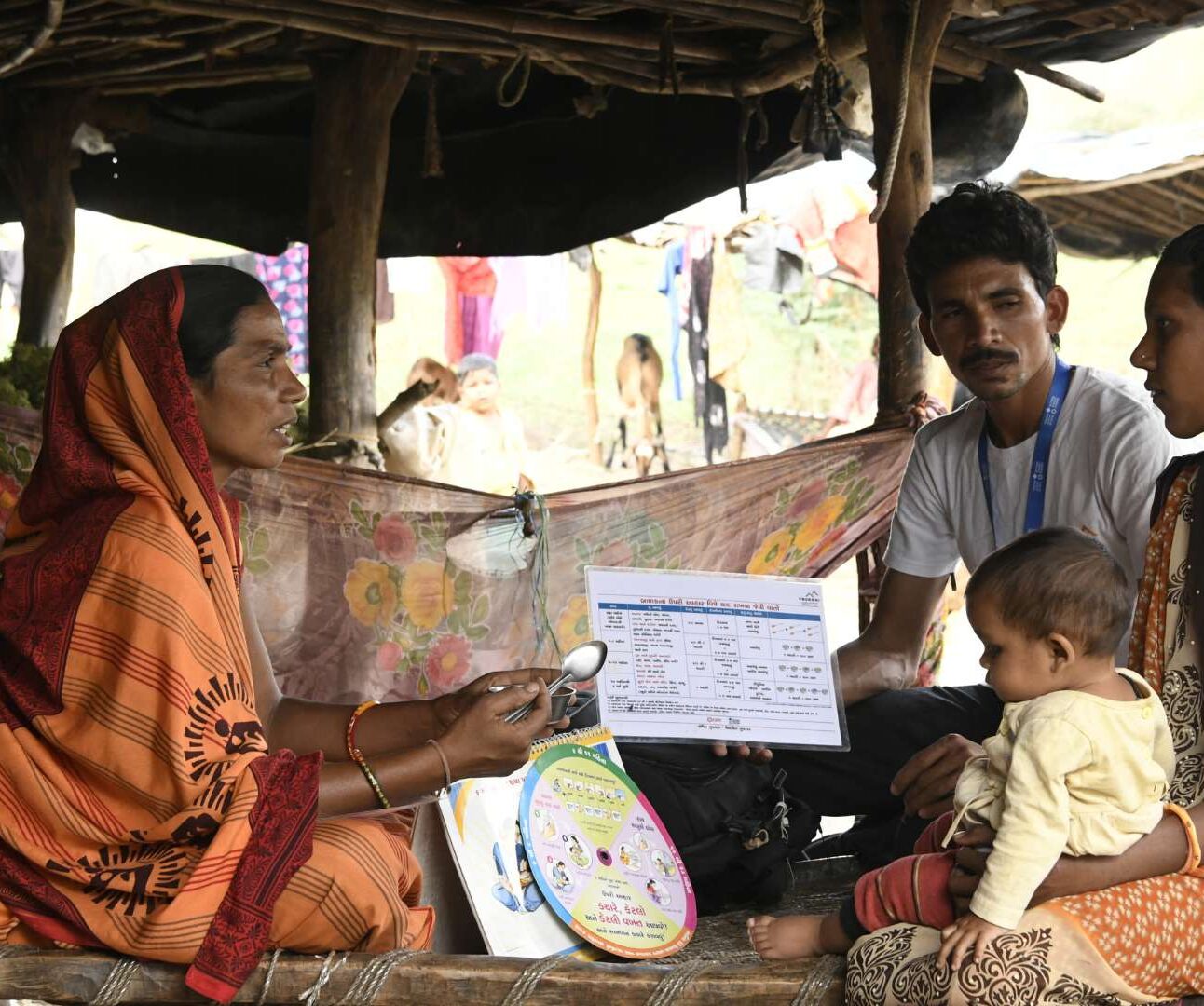
Explore our nutrition resources
Knowledge Against Hunger is the home of all our technical, research, learning and strategic documents. Take a look at our nutrition resources here.
Our areas of expertise
Learn more about our expertise in nutrition research, assessments, and the treatment and management of acute malnutrition, and how we support more effective nutrition programming.