

Measuring treatment coverage: from contact to effective coverage
In this blog, Uwimana Sebinwa, Senior Nutrition Advisor at Action Against Hunger, explores the difference between contact coverage and effective coverage and why understanding this distinction is essential when assessing the coverage of acute malnutrition management services.
Detecting and enrolling cases at an early stage helps ensure that children receive care before their condition worsens and before complications develop, thereby improving recovery outcomes and maximising programme effectiveness. The effectiveness of IMAM programming also depends on compliance with the IMAM protocol and a good retention from admission to cure.
Therefore, for IMAM programming to be effective and reach scale, accurate assessments of the need and reliable data on the coverage and quality of acute malnutrition management services are essential.
What do we mean by treatment coverage?
Much of the work on coverage evolves from Tanahashi’s work in 1978 on evaluating the effectiveness of health service coverage (Tanahashi 1978), which describes key stages in the achievement of effective coverage: services must first be available in sufficient quantity, then accessible so people can reach them, and acceptable so communities are willing to use them.
This leads to contact coverage, where those in need actually use the service, and finally effective coverage, when it is used correctly and continuously to achieve the intended outcome. In the context of IMAM interventions, coverage—also known as treatment coverage—traditionally refers to the proportion of individuals who require or are eligible to receive a service that actually receive that service (Myatt et al. 2012).
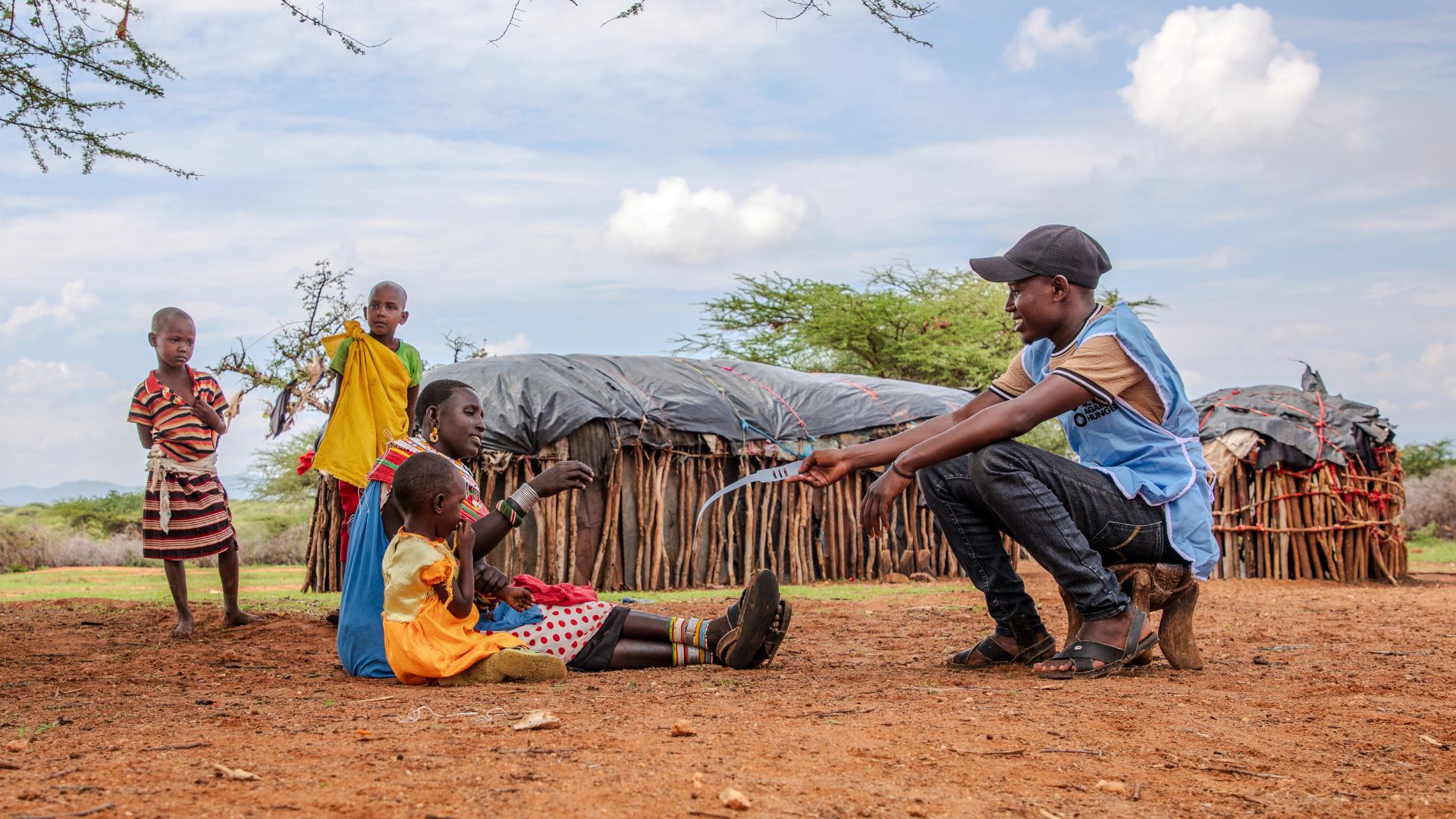
Patrick is an Action Against Hunger community health worker from Kenya.
When do we consider that a child with wasting has received the service they need?
In practice, during coverage assessments there are frequent debates among practitioners about the case definition used to classify MAM or SAM children as “covered” or “non covered”, highlighting a persistent ambiguity behind the perception of the quality of care. Too often, there is a tendency in implementation practice to interpret that enrolment in the service equals coverage.
In operational settings where RUTF stockouts are frequent, this shortcut is dangerously misleading. Disruptions in service delivery may take the form of prolonged shortages of supplies, irregular commodity availability, periodic disruptions in service provision, or partial rationing that undermines treatment protocols. In such contexts, a child may be registered, weighed, and recorded in routine data—and may even have attended their most recent visit—yet still leave the facility without the therapeutic input essential for recovery.
Could we then, in good conscience, describe this child as “covered”?
The answer must be unequivocally no.
Would we consider that a child with severe malaria has received the treatment he or she needs if they must wait until the following week to access life‑saving antimalarial drugs? Severe acute malnutrition is likewise a life‑threatening condition. The effectiveness of treatment depends not only on reaching children in need, but on meaningfully serving them through timely and appropriate care. Anything less risks creating an illusion of performance, while children remain untreated in practice.
What we are observing here is the critical distinction between contact coverage and effective coverage, where contact coverage refers to children who have interacted with the service (e.g., been screened or admitted), while effective coverage refers to children who receive all components of appropriate, uninterrupted treatment, including consistent RUTF provision and follow-up. This distinction is crucial to ensure proper monitoring of IMAM services.

Nolntulan screens her toddler Rashaei for malnutrition.
What have we learned from previous coverage assessments?
Lessons learned from previous coverage assessments have shown that among the barriers consistently emerging, interruptions in the supply of RUTF remain a major constraint. Such disruptions – whether due to prolonged stockouts or irregular availability – significantly undermine both coverage and treatment uptake. In these circumstances, communities quickly lose confidence in services that cannot reliably provide care. Caregivers may discontinue attendance altogether, reinforcing patterns of low coverage and high default. Others may continue attending but experience extended lengths of stay, increasing the risk of clinical deterioration and complications, and fostering the perception that treatment is ineffective. In this way, supply interruptions do not only reduce service quality – they actively erode demand.
Practitioners should be careful and stay away from the tendency to normalise these gaps. Precision in definitions is a form of accountability. If we accept that a child who leaves a facility without RUTF is “covered,” we undermine the standards required to deliver effective care. We also compromise the integrity of our data, weakening our ability to advocate for corrective action – whether in supply chain management, logistics planning, or resource allocation. The same principle applies when RUTF is dispensed but not effectively received or utilised at household level (e.g. diversion), as these gaps – though less directly controlled by the system – still compromise the child’s likelihood of recovery and the intervention’s ability to achieve its intended health outcome.
Reasserting the principle of effective coverage has several practical implications:
- Coverage assessments should interpret “covered” cases as those receiving appropriate and continuous treatment and ensure that the presence of RUTF in the household is systematically verified.
- Data systems must explicitly capture whether RUTF was provided at each visit, from enrolment to exit.
- Programme performance reviews should integrate supply chain indicators as core determinants of coverage, not peripheral concerns.
- Leadership and coordination mechanisms must treat stock-outs as critical programme failures, triggering immediate corrective action rather than retrospective explanation.
As IMAM programmes scale and evolve, the credibility of our metrics—and the integrity of our practice—depend on our willingness to confront uncomfortable realities.
A child with severe acute malnutrition who leaves the health facility without receiving RUTF cannot be considered a beneficiary of the service; rather, they reflect a failure in service delivery.
Let us be clear, consistent, and uncompromising: coverage must mean treatment received, not just access attempted.
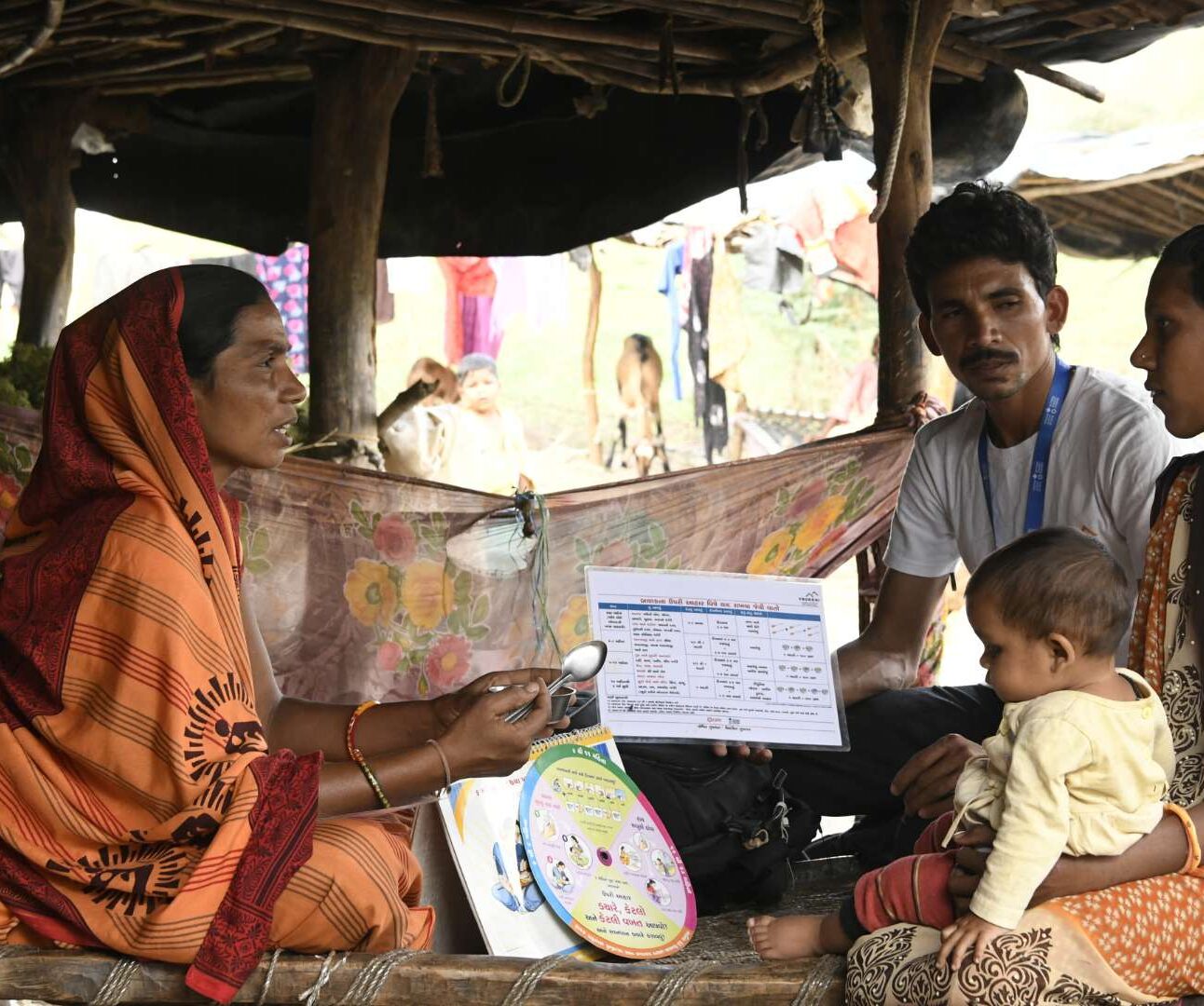
Explore our nutrition resources
Knowledge Against Hunger is the home of all our technical, research, learning and strategic documents. Take a look at our nutrition resources here.