
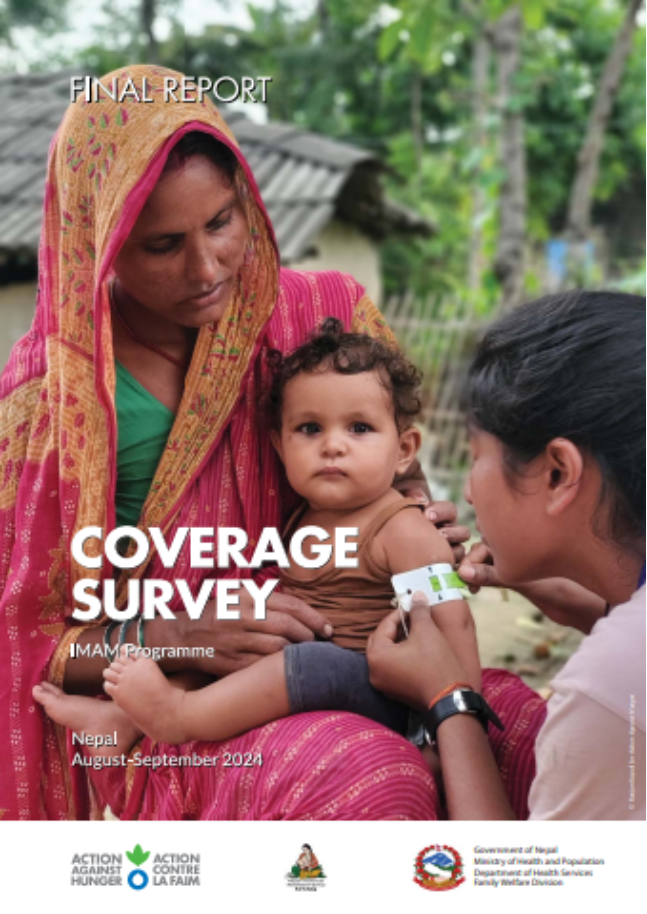
Coverage survey, IMAM Programme, Nepal, August-September 2024 - Final report
This coverage survey consisted of a series of SLEAC surveys, which were conducted across three selected districts, namely Rautahat district in Madhesh Province, Dolakha district in Bagmati Province and Mugu district in Karnali Province, to identify key barriers and boosters of access and coverage from the community perspective. It was complemented by qualitative data gathered through interviews with health workers and field observations by the survey team.
1st September 2024
Action Against Hunger
Eleanor Crook Foundation
The Government of Nepal is implementing IMAM programme in all districts. It tackles acute malnutrition through a community-based approach, encompassing nutrition education, therapeutic feeding, and health services. Severe Acute Malnutrition (SAM) cases without medical complications are treated in Outpatient Therapeutic Care Centres (OTCC), whereas SAM cases with medical complications are treated in Inpatient Therapeutic Care Centre (ITCC). In addition, Nutrition Rehabilitation Centres embedded in hospitals also manage Severe Acute Malnourished (SAM) cases by facility-based services. Moderate Acute Malnutrition (MAM) are mostly managed through counselling to mothers on Infant and Young Child Feeding (IYCF), care practices and hygiene and sanitation. In few food insecure districts, various organizations are conducting supplementary feeding programs.
IMAM programme performance monitoring is integrated into national information system (DHIS2), which includes a number of relevant indicators, which can be used for an indirect estimation of IMAM coverage. However, the routine monitoring data mechanisms have limited capacity to provide insight into barriers and boosters of access and coverage and therefore direct methods, such as coverage surveys, are recommended for the purpose.
From December 2023 to April 2024, Action Against Hunger Nepal conducted a gap analysis across all provinces of Nepal to identify bottlenecks in the implementation of IMAM services using a framework of health system building blocks. This coverage survey sought to complement the gap analysis and contribute to a comprehensive evidence-based framework which will be used for the revision of IMAM national guidelines in the context of the new WHO guidelines released in June 2023.
This coverage survey consisted of a series of SLEAC surveys, which were conducted across three selected districts, namely Rautahat district in Madhesh Province, Dolakha district in Bagmati Province and Mugu district in Karnali Province, to identify key barriers and boosters of access and coverage from the community perspective. It was complemented by qualitative data gathered through interviews with health workers and field observations by the survey team.