

Updating child wasting guidelines: when global guidelines meets national reality
Mthulisi Dube, Action Against Hunger’s Senior Nutrition Advisor, explains what Fiji and Laos teach us about revising wasting guidelines in low-burden, resource-constrained contexts.
When I started working for Action Against Hunger in 2024 one of my first projects was the Accelerating National Wasting Treatment Reform project. This initiative was funded through the Eleanor Crook Foundation (ECF) with the purpose of supporting national governments of Fiji and Lao PDR, among others, in the complex task of revising their national wasting management guidelines to reflect new and improved approaches to treatment and to facilitate the in-country rollout of these guidelines.
This work followed the release of the World Health Organization (WHO) revised guidelines on the prevention and management of wasting and nutritional oedema in infants and children under 5 years of age in 2023. Armed with the UNICEF’s Brief Guide to Updating National Guidelines on Child Wasting, our original plan was based on its recommendations, which provided a great starting point.
In practice, however, the process wasn’t as linear as we expected. To make it work, we had to navigate various local contexts and interests, resulting in a more hands-on and customized approach. This learning piece captures the critical reflections and operational insights gathered during the project.
Why Fiji and Laos matter in the global nutrition conversation
There is a lot to learn from Fiji and Lao PDR as global conversations on child wasting are often shaped by high burden or emergency contexts where the focus is on scale and rapid response. Fiji and Lao PDR offer a different perspective. According to the latest Global Hunger Index, Fiji has a child wasting prevalence rate of 4.6% and Lao PDR of 10.7%, yet both undertook revisions of their national wasting guidelines following the 2023 WHO recommendations. Their experiences highlight a reality often overlooked – the challenge is not only what to adopt from the global guidance, but rather determining what is feasible. Where political prioritisation is limited and operational capacity uneven, the guideline revision becomes less about the scale and more about the feasibility, and preparedness for future shocks.
Lesson #1: Accountability beats architecture
UNICEF’s Brief Guide to Updating National Guidelines on Child Wasting’s very first step is unequivocal: identify who is accountable and who is responsible for the guideline update, using a clear structure, such as RASCI matrix. A RASCI matrix is a project management tool used to clarify operational roles by mapping out who is Responsible, who is Accountable, who provides assistance (Supportive), who is Consulted, and who is Informed. Fiji and Lao PDR applied this principle in contrasting ways while validating its importance.
Leverage what already exists: Fiji avoided “stakeholder fatigue” by embedding the revision process within its existing multisectoral National IMAM Technical Working Group (TWG), led by the Ministry of Health’s Chief Nutritionist and Head of Paediatrics. By working through an established coordination mechanism, the process benefited from familiar working relationships, and agreed decision-making pathways. This minimized confusion over roles and responsibilities, and reinforced national ownership by strengthening, rather than bypassing or replacing, existing systems.
Leadership over formality: While formal steering groups were initially planned, in Lao PDR, the Centre of Nutrition within the MoH assumed de facto governance ownership. This streamlined decision-making and ensured a single institutional “pen-holder,” which was vital for maintaining momentum during complex technical debates. This experience challenges the assumption that formal multisectoral committees are always required. In some contexts, clear departmental authority and continuity of leadership can outperform complex governance designs, particularly where coordination capacity is limited.
Key takeaway: Successful guideline reform depends less on ideal governance models and more on context appropriate authority. When leadership is clear, processes move.
Lesson #2: Evidence generation must answer feasibility
UNICEF’s Brief Guide to Updating National Guidelines on Child Wasting places heavy emphasis on two linked steps: Mapping existing guidance, and site visits to services delivering care, to triangulate policy intention with operational reality. Both Fiji and Lao PDR used these steps not as formalities, but as decision making tools. In both countries, field assessments served as the ultimate “reality check.”
Geography as a decisive feasibility factor: Rapid field assessments across Fiji’s divisions highlighted an operational constraint that no desk review could surface. Routine outpatient visit schedules were incompatible with island geographies, which, for example, needed to be translated into adaptations of visit frequency. UNICEF described this process as “adapting recommendations based on feasibility, not ideology”.
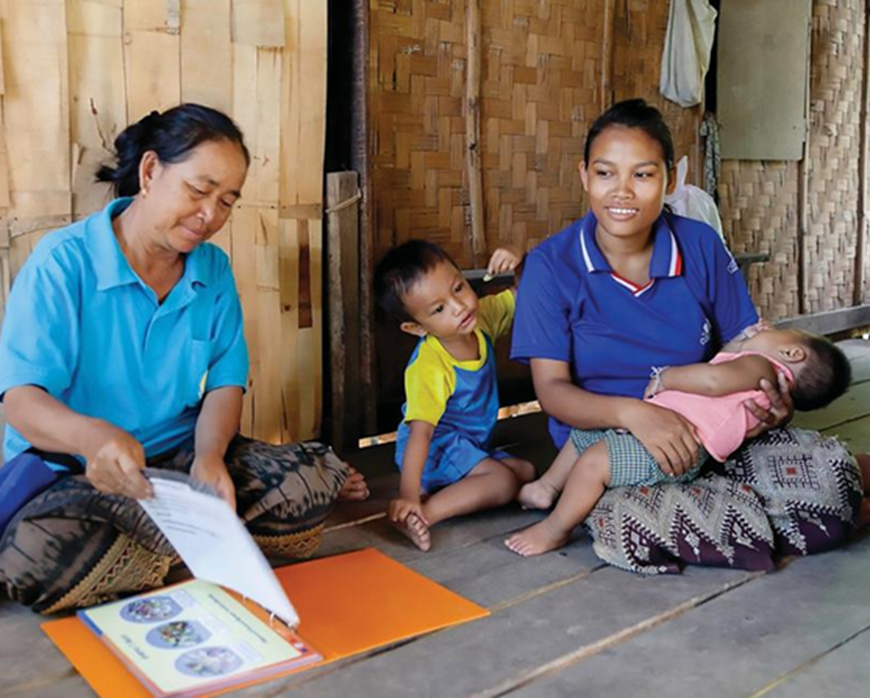
Operationalising local data: In Lao PDR, site visits unveiled the high prevalence of thiamine deficiency and the equipment limitations of district hospitals. This learning justified expanding thiamine supplementation beyond suggested WHO minimum thresholds and introducing an “in-depth assessment” phase to refine the triage between inpatient and outpatient care.
Key takeaway: Local evidence is not about replicating global data. It is about understanding the local context to uncover the specific insights needed for the successful operationalisation and implementation of the guidelines.
Lesson #3: Translation is not an administrative task, it is a technical risk
Lao PDR’s experience highlights a frequently underestimated challenge: language. Translating complex clinical guidance into Lao required not only linguistic skills but medical and nutrition expertise. Issues with script compatibility, terminology, and loss of nuance posed direct patient safety risks. The solution: a dedicated translator working alongside technical experts turned translation into a continuous, integrated process, rather than a final step.
Key takeaway: Translation must be budgeted for from the start and treated as a core part of technical drafting. Delaying it jeopardises both quality and timelines.
Lesson #4: Guidelines are just theory until they are stress-tested in training
UNICEF’s Brief Guide to Updating National Guidelines on Child Wasting positions training not as an endpoint, but as part of an ongoing feedback loop. Both countries inadvertently operationalised this principle and Training of Trainers (ToT) revealed itself as more than a dissemination step. In Lao PDR, clinicians tested draft job aides during Training of Trainers, revealing errors missed during the review. In Fiji, training surfaced the absence of practical manuals, prompting a reallocation of resources before a national scale up. High post training knowledge gains were important, but the deeper value lay in identifying what did not work leading to corrections that improved the final guidelines.
Key takeaway: Training is not the final step of dissemination; it is a critical feedback loop. The training can used to pilot job aids and tools, allowing for refinement before final validation.
Lesson #5: Adoption, non-adoption or adaptation
One of the most important elements of UNICEF’s Brief Guide to Updating National Guidelines on Child Wasting is the call to document what will not be adopted, and why. Fiji and Lao PDR demonstrate the value of this transparency. CHW‑led treatment was consciously not adopted in Lao PDR, due to limited system maturity. In Fiji Reduced RUTF dosage was only partially adopted, with step‑down dosing excluded because of monitoring concerns. These were not rejections of WHO evidence but affirmations of system readiness. Responsible reform requires knowing when a system is and isn’t ready for change.
Key takeaway: Non adoption is not resistance; it is responsible stewardship when systems are not ready. System improvement roadmaps must therefore be embedded to build the necessary capacity for future adoption.
Closing reflection
The experiences of Fiji and Lao PDR demonstrate that guideline adaptation is fundamentally an exercise in context-driven ownership. Translating global recommendations into local practice requires a deliberate alignment of global recommendations with the realities of a nation’s geography, language and health system capacities.
For countries with low or concentrated wasting burdens, the true measure of success is not how closely a document copies global text, but how effectively it serves local health workers. Guidelines become genuine national assets only when the revision process respects the operational context just as much as the global clinical evidence.
Explore our nutrition resources
Knowledge Against Hunger is the home of all our technical, research, learning and strategic documents. Take a look at our nutrition resources here.