
Mobile Clinics Paving the Way for Enhanced Community-Based Nutrition Programing
This case study is part of a compendium of country-level case studies produced by the Delivery System for Scale1 project that explore promising, context-specific approaches to scale prevention and treatment of wasting for children under five.
1st January 2023
UNICEF, IRC, Action Against Hunger, Save the Children
USAID
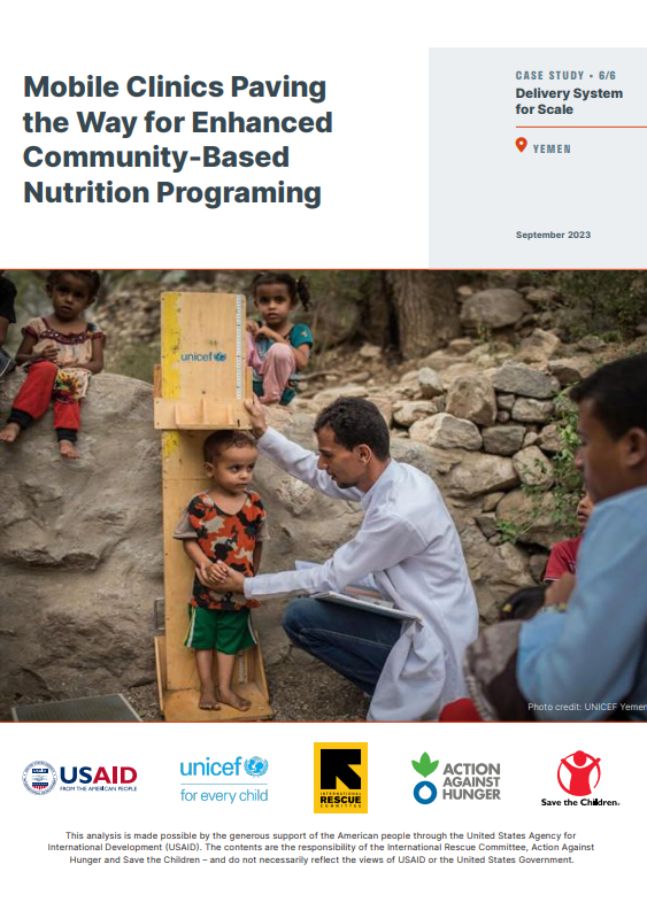
This case study is part of a compendium of country-level case studies produced by the Delivery System for Scale project that explore promising, context-specific approaches to scale prevention and treatment of wasting for children under five. In Yemen, where acute food insecurity affects 17 million people, approximately 3 million children under five face the risk of acute malnutrition, with 540,000 at risk of severe acute malnutrition (SAM). Mobile clinics have proven successful as a strategy for delivering essential primary healthcare and nutrition services in hard-to-reach and crisis- affected areas. Nevertheless, recent funding cuts resulting in fewer operational mobile clinics have compromised these services. Ensuring continuous access to and availability of nutrition services remains a significant challenge. This case study describes the evolution of mobile clinics and their role in scaling up prevention and treatment nutrition services in Southern Yemen. It also offers recommendations based on a recent ‘Assessment of the current state of service delivery for the prevention and treatment of child wasting in high-burden governorates’ on how treatment efforts could be expanded in northern Yemen and through community cadres, thereby enhancing both access and the sustainability of treatment countrywide.