
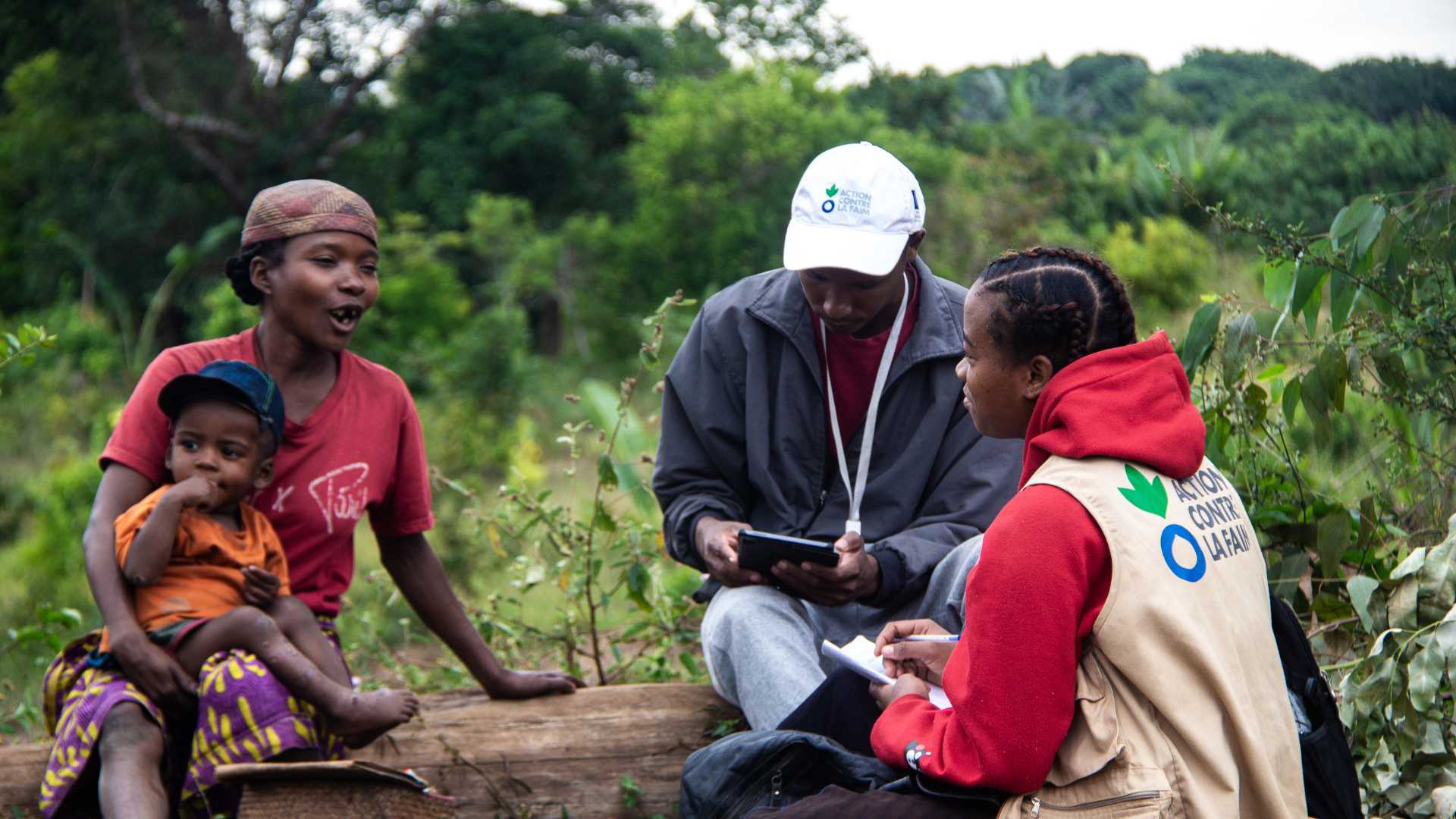
Coverage assessments aim to measure the treatment coverage of Community Management of Acute Malnutrition (CMAM) programmes and the barriers of access to these services.
The effectiveness of a CMAM programme and the coverage it achieves are strongly linked. An effective programme will achieve good coverage and a programme with good coverage is expected to be an effective programme.
There are different methodologies, depending on the scale of assessment, information needed and any previous assessments conducted in the area.
Assessment methods can be used independently or consecutively to gather relevant data to measure coverage or provide insight about barriers of access.
SQUEAC
The SQUEAC method is a comprehensive, iterative tool to analyse the barriers and boosters to coverage and give an estimate of coverage. It also provides actions for improving access and coverage.
SQUEAC is used at health district level. It takes around 21 days to complete.
By using routine programme data, case finding and information from community members and health professionals, it provides:
- Coverage estimate percentage
- Community profile
- Barrier information
- Action plan
SLEAC
The SLEAC method is designed to give rapid information about the spatial representation of coverage.
SLEAC was developed for measuring coverage at regional level. It takes around 5 to 7 days per district.
This method uses case finding to give a coverage classification or estimate and provide information about barriers.
Follow up SQUEAC
If a coverage assessment has already been completed, much of the necessary information is available. A Follow-up SQUEAC assessment should be carried out to assess the impact of remedial activities.
Using the same data sources as a full SQUEAC assessment, follow-up takes 7 to 10 days.
Bottleneck Analysis
Bottlenecks can appear at various levels of service provision, ranging across the four broad categories of enabling environment, supply, demand and equality. These categories are based on the Tanahashi model of coverage, which identifies the relationship between the target population and service achievement.
Collecting routine data as per the Tanahashi model of determinants of coverage can help identify, in a structured and logical manner, bottlenecks to effective coverage. This analysis should be carried out on a regular basis using routine data and qualitative stakeholder discussion.
Bottleneck Analysis uses routine programme data to provide information about barriers and produce an action plan.
At health district level, there is one day of data collection per month with stakeholder consultations every three months.
At regional or national level, data is collected over one to three weeks, with stakeholder consultations once or twice a year.
Community Assessment
Qualitative information is key to understand the profile of the community, health seeking behaviour and communication channels.
Community Assessment forms part of a SQUEAC assessment but it can be carried out independently if a coverage estimate is not needed.
Please note that we’re constantly adding content and resources to this site. Use the search function to look for any templates that you may need for your assessment implementation. You can email us with your request in case you do not find what you need.